


The New Food Pyramid: Well-Intentioned but Missing the Mark
- Tasha Rosales Wellness Homemade

- Jan 12
- 12 min read
Updated: Jan 13
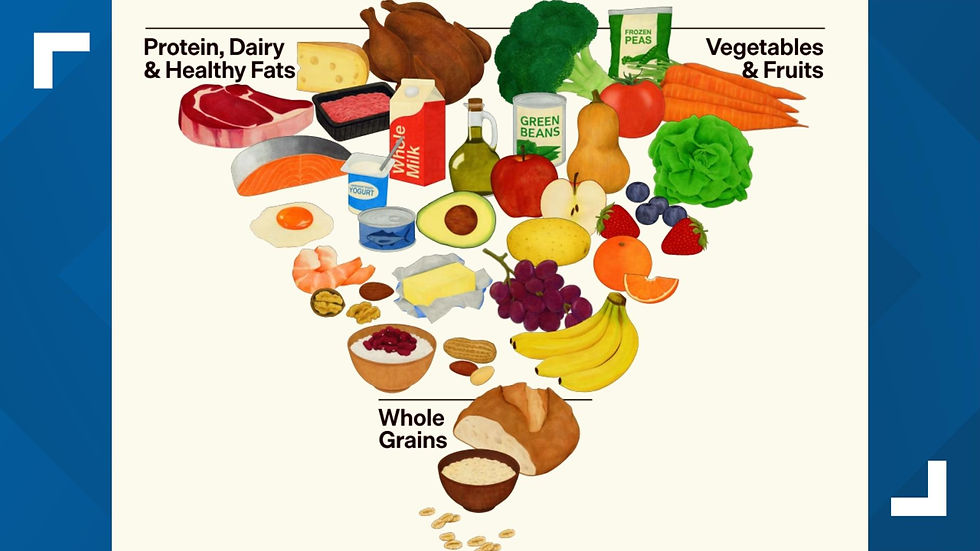
The latest dietary guidelines have arrived with fanfare about their emphasis on whole foods and quality nutrition. As a nutrition professional who works with real people navigating real grocery stores and making real food choices, I have serious concerns. While I appreciate certain aspects of these recommendations, I worry that they fundamentally misunderstand the American consumer and may actually worsen our public health crisis rather than improve it.
What I Appreciate: The Whole Food Emphasis
Let me start with what works. The focus on whole, minimally processed foods is absolutely a step in the right direction. Encouraging people to choose intact grains, fresh produce, and unprocessed proteins aligns with solid nutritional science. This approach naturally increases fiber intake, provides more micronutrients, and helps people develop a healthier relationship with food.
But here's the thing: this isn't new. Nutrition professionals have been recommending whole foods over processed alternatives for decades. While I'm glad to see this emphasis continue, let's not pretend we've discovered some groundbreaking approach. The real question is whether these new guidelines will actually help Americans make better choices, and I have significant doubts.
The Grain Confusion: Carbs at the Bottom, Understanding at Zero
The new pyramid places grains at the bottom as a foundational food group, yet carbohydrates remain one of the most profoundly misunderstood aspects of nutrition among the general public. This disconnect is a recipe for disaster.
What People Don't Know About Carbohydrates
Let me be blunt: the average American has no idea what a carbohydrate actually is. I cannot tell you how many times I've heard clients say "I don't eat carbs" while consuming substantial amounts of fruit, starchy vegetables, and even dairy. They think "carbs" means bread and pasta, full stop.
So let's clarify: Carbohydrates are one of three macronutrients that provide energy to the body. Chemically, they're compounds made of carbon, hydrogen, and oxygen. When you eat them, your body breaks them down into glucose, which fuels your brain, muscles, and organs.
Carbohydrates exist on a spectrum:
Simple carbohydrates are one or two sugar molecules that digest quickly and spike blood sugar rapidly. These include glucose, fructose (fruit sugar), sucrose (table sugar), and lactose (milk sugar).
Complex carbohydrates are longer chains that take more time to break down, including starches and fiber. These provide more sustained energy and come packaged with vitamins, minerals, and beneficial plant compounds.
Where Carbohydrates Actually Come From
This is critical, because the confusion here is profound. Carbohydrates are found in:
Grains: wheat, rice, oats, quinoa, barley, bread, pasta, cereal
Starchy vegetables: potatoes, sweet potatoes, corn, peas, winter squash
Legumes: beans, lentils, chickpeas (yes, these are primarily carbs, not just protein)
Fruits: ALL fruits contain natural sugars and are primarily carbohydrate sources
Dairy: milk and yogurt contain lactose, a carbohydrate
Non-starchy vegetables: even leafy greens, broccoli, and peppers contain small amounts of carbohydrates
Sugars and sweeteners: honey, maple syrup, agave, table sugar
Processed foods: crackers, cookies, chips, baked goods
When the pyramid places grains at the foundation but doesn't educate people about what carbohydrates are and where they come from, we're setting people up to either fear an entire macronutrient or consume it mindlessly. Neither outcome serves public health.
People tell me constantly that they "avoid carbs" while eating three bananas a day, a sweet potato with dinner, and carrots with lunch. Or conversely, they eliminate nutritious whole grains while drinking juice and sweetened coffee beverages. This isn't their fault—it's a failure of education.
Major Concern #1: The Red Meat Problem and What We Actually Know
One of my most significant concerns is the continued emphasis on meat, particularly red meat, as a primary protein source. But it goes beyond just emphasis. The overall recommendation to eat more meat, combined with the resurgence of cooking with beef tallow and other animal fats, creates a troubling contradiction within the guidelines themselves.
We're being told to eat more meat and use higher fat dairy products, yet the guidelines still recommend limiting saturated fats. This is contradictory advice that leaves consumers confused and nutritionists frustrated. You cannot simultaneously promote increased meat consumption and beef tallow while telling people to limit saturated fats. Red meat and beef tallow are primary sources of saturated fat. Higher fat dairy products contain significant saturated fat. These recommendations are fundamentally at odds with each other.
Yes, protein is essential for muscle maintenance, immune function, and countless bodily processes. But the focus on red meat specifically, and the encouragement to use animal fats like beef tallow for cooking, is concerning given what the research actually tells us.
The Science We Can't Ignore
Multiple large-scale studies have established links between regular red meat consumption and increased risks of cardiovascular disease, certain cancers (particularly colorectal cancer), and type 2 diabetes. The mechanisms include:
Heme iron promoting oxidative stress and inflammation in the digestive tract
Saturated fat raising LDL cholesterol in many individuals
High-temperature cooking creating heterocyclic amines (HCAs) and polycyclic aromatic hydrocarbons (PAHs) linked to cancer
L-carnitine conversion by gut bacteria into TMAO, associated with cardiovascular disease risk
What the Healthiest Diet Actually Looks Like
Here's what frustrates me: we already know what dietary pattern produces the best health outcomes. Study after study shows that the Mediterranean diet is associated with longevity, lower disease rates, and better overall health. And what does the Mediterranean diet emphasize?
Primarily plants: vegetables, fruits, whole grains, legumes, nuts, and seeds form the foundation.
Some fish and poultry: consumed regularly but in moderate portions.
Red meat sparingly: eaten only occasionally, not as a dietary staple.
Healthy fats: primarily from olive oil, nuts, and fatty fish.
The Mediterranean lifestyle isn't about eliminating any food group (it's about proportion and emphasis). Yet our new dietary guidelines seem to miss this critical lesson, giving red meat far more prominence than the evidence supports.
I've worked with clients who've increased their red meat consumption based on trendy dietary advice, and I've watched their cholesterol levels climb and their inflammation markers worsen. The science is clear, and our guidelines should reflect it.
Major Concern #2: The Fat Overconsumption Crisis Nobody's Talking About
The guidelines emphasize "healthy fats," which sounds great in theory. But without clear portion guidance, this recommendation is causing real harm.
The Reality from My Practice
Here's what I observe: approximately 90% of my clients are significantly over-consumming fats when we first start working together. And they're genuinely shocked when I show them the numbers.
These aren't people eating fast food daily. These are health-conscious individuals who've embraced "clean eating" and believe that if food is healthy, quantity doesn't matter. A typical day might include:
Breakfast: Avocado toast drizzled with olive oil, plus two eggs (45-55g fat)
Lunch: Salad with grilled chicken, nuts, seeds, and generous olive oil dressing (30-40g fat)
Snack: Nut butter with apple slices or a nut-based protein bar (15-20g fat)
Dinner: Steak with roasted vegetables tossed in olive oil (40-50g fat)
Evening: Dark chocolate or more nuts (10-15g fat)
Total: 140-180 grams of fat daily
For context, someone eating 2,000 calories should consume roughly 44-78 grams of fat (20-35% of calories). My clients are often consuming double the recommended amount.
Stop Guessing What to Eat Every Day for Lunch
You can learn a simple way to build balanced meals without tracking or stress. The Plate It Method shows you how to balance protein, carbs, fats, and veggies in a way your body can use. Grab the free guide here!
The Macro Overlap That Everyone Forgets
Here's the critical issue the guidelines fail to address: foods don't fit neatly into single macronutrient categories. Red meat isn't just protein. A ribeye might be 50% fat by calories. Chicken thighs, salmon, nuts, seeds, and cheese all contain substantial fat alongside their protein.
When we tell people to eat plenty of protein AND plenty of healthy fats, without acknowledging this overlap, we create a situation where people drastically overconsume fats without realizing it. They count their salmon as "protein," add olive oil as "healthy fats," snack on almonds for "healthy fats," and wonder why they're consuming 150+ grams of fat daily.
The result? Clients come to me confused about why they're not losing weight despite "eating clean." They're frustrated that they feel sluggish and their clothes don't fit better. But because everything carries a "healthy" label, they assume they're doing everything right.
This is why vague guidance like "include healthy fats" is not just insufficient. It's potentially harmful.
Major Concern #3: The Portions Have Disappeared
Perhaps most troubling is what's been removed from the guidelines: specific portion recommendations.
Yes, there's a chart suggesting "X cups of fruits and vegetables" per day. But beyond that, the specificity that people desperately need has vanished. How much protein should you eat daily? How many servings of grains? What does a serving size actually look like in real life?
The assumption seems to be that people will intuitively eat appropriate amounts of whole foods. But my professional experience tells a very different story. People don't know what appropriate portions look like, especially when they're eating foods labeled as "healthy."
The Sugar Discrepancy
The sugar recommendations in the new guidelines present a confusing and contradictory picture. For adults, the guidelines maintain the 50 grams per day added sugar recommendation. To put this in perspective, that's more than 12 teaspoons of added sugar daily. The American Heart Association, our leading cardiovascular health organization, recommends no more than 25 grams (6 teaspoons) per day for women and 36 grams (9 teaspoons) for men.
But the guidance becomes even more perplexing when it comes to children. The new guidelines recommend no added sugar until age 10, which seems somewhat unrealistic given the reality of American food culture, birthday parties, school events, and everyday life. Previously, the recommendation was no added sugar before age 2, with a guideline of 24 grams per day for women and children over 2. Now we've gone from specific, actionable numbers to essentially "eat less" for adults and a blanket prohibition until age 10 for children, with no guidance on what happens after that age.
So what are parents supposed to do when their 10-year-old can suddenly have added sugar? How much is appropriate? What's the transition? The guidelines are silent on this.
This represents a significant discrepancy and a loss of practical guidance. Why aren't our national dietary guidelines aligned with the recommendations from the organization that specializes in heart health? Excessive sugar consumption is directly linked to obesity, type 2 diabetes, heart disease, fatty liver disease, and numerous other health conditions. By maintaining a 50-gram limit when leading health experts recommend nearly half that amount for women, we're potentially putting people at higher risk.
This approach undermines the credibility of the guidelines and sends profoundly mixed messages to consumers who are trying to make informed choices about their health and their children's health. If the American Heart Association has determined that lower limits are necessary for cardiovascular health, our national guidelines should reflect this evidence, not contradict it. And if we're going to set age-based restrictions, we need to provide realistic, actionable guidance that parents can actually implement.
Want to Learn More About Sugar?
If you've been looking for a crash course on sugar, it's impact on your health, how to find it and how to avoid it...this Sugar Guide is was made for you. It will clear up all the discrepancies and support you as you come into alignment with what you body truly needs.
The Alcohol Ambiguity
Previous guidelines offered specific guidance: up to one drink per day for women, up to two for men, with clear definitions of what constitutes "one drink." The new guidelines simply say "reduce consumption."
Human behavior and behavioral science consistently show us that people perform better with direct, specific guidance rather than vague recommendations. Yet that direct guidance has now been lifted, leaving people to determine for themselves what "less" means—which is deeply concerning.
Based on extensive research, we know that:
Women should limit alcohol to one serving per day maximum
Men should limit alcohol to two servings per day maximum
One serving means 5 oz wine, 12 oz beer, or 1.5 oz spirits
Less is better, and none is best for overall health
Removing this specificity doesn't help people make informed decisions. When we understand that humans need concrete, actionable information to change behavior, replacing clear limits with "reduce consumption" feels like abandoning people to figure it out on their own.
The Fiber Omission
I searched the dietary guidelines extensively for specific fiber recommendations and found nothing concrete. Are we assuming Americans know they should consume 25-35 grams of fiber daily? Because they don't. Are we hoping they'll magically consume enough through whole foods? Because they won't.
Fiber is crucial for digestive health, blood sugar regulation, cholesterol management, and disease prevention. The absence of clear fiber targets represents a massive oversight. Most Americans consume only about 15 grams daily—half of what they need. Without explicit guidance, this won't change.
The Fundamental Problem: Guidelines Written in a Vacuum
My overarching concern is that these guidelines seem to have been written without consulting the people who will actually use them: average American consumers trying to feed their families and improve their health.
The writers appear to assume a baseline level of nutritional knowledge that simply doesn't exist in the general population. They assume people know:
What constitutes a carbohydrate
That vegetables and fruits contain carbs
What appropriate portion sizes look like
That "healthy" foods still have calorie limits
How to balance macronutrients across a day
That foods contain multiple macronutrients simultaneously
These assumptions are wrong. And when our national dietary guidelines are built on faulty assumptions, they fail the people who need them most.
My Professional Concern: We're Making Things Worse
I worry deeply that these guidelines, despite their good intentions, will lead to:
Macro overconsumption: People will eat excessive amounts of fats and proteins while demonizing or misunderstanding carbohydrates. I'm already seeing this in my practice, and it will accelerate.
Continued confusion: Without clear education about what food groups actually are and where they come from, people will continue making well-intentioned but misguided choices.
Health deterioration: The emphasis on red meat and fats, combined with lack of portion guidance, could worsen cardiovascular disease rates, obesity, and metabolic dysfunction.
Widening health disparities: People with resources (education, time, access to nutritionists) will figure this out. Everyone else will struggle, widening the already unconscionable gap in health outcomes.
In order to combat this, my goal is to continue to provide free education and resources in 2026 to support women who are looking for simple, real-life nutrition. You can follow along over on Instagram @wellness.homemade.
What We Actually Need
Americans deserve dietary guidelines that:
Educate fundamentally: Explain what carbohydrates, proteins, and fats are. Where they come from. Why we need them. This isn't condescending. It's necessary.
I've said this for years: public education is going to be a key driver in improving health outcomes. My daughters both received nutrition education in their freshman year of high school, and it was incredibly accurate and helpful. But why does it stop there? Why aren't we continuing this education into college and throughout adulthood? Why aren't we offering this as a health insurance perk, where people can take a comprehensive nutrition course and perhaps receive lower premiums or other incentives? We invest in driver's education because operating a car safely requires knowledge. Why don't we approach nutrition (something that impacts every single day of our lives and our long-term health outcomes) with the same seriousness?
Provide specific portions: Visual guides, gram amounts, serving sizes that people can actually use when shopping and cooking.
Acknowledge macro overlap: Help people understand that chicken isn't just protein, nuts aren't just fats, and beans aren't just carbs. This is a critical concept that most people have never been taught. When we categorize foods into macronutrient groups, we're identifying what that food provides the most of, not what it exclusively contains. Chicken is called a "protein" because protein is its predominant macronutrient, but it also contains fat (sometimes quite a bit, depending on the cut and preparation). Nuts are often labeled as "healthy fats," but they also provide protein and carbohydrates. Beans are frequently listed as a protein source, but they're actually higher in carbohydrates and also contain protein and minimal fat. This overlap means that when you eat a piece of chicken, you're getting protein AND fat. When you add nuts to your salad, you're adding fats AND protein AND carbs. When you eat beans, you're primarily eating carbohydrates with a good dose of protein. Understanding this is essential for people to accurately assess their daily intake and avoid unintentionally overconsumming certain macronutrients while thinking they're following recommendations correctly.
Align with research: Emphasize plant-forward eating patterns like the Mediterranean diet that actually produce the best health outcomes.
Include fiber targets: Make fiber a priority with clear daily recommendations and education about sources.
Give actionable limits: Specific numbers for added sugar, alcohol, saturated fat, and sodium that align with leading health organizations.
Address portions explicitly: Because "eat whole foods" without quantity guidance has led to massive overconsumption.
The Bottom Line
I support the whole food emphasis. I appreciate the intention behind these guidelines. But intention doesn't improve public health—clear, evidence-based, actionable guidance does.
The average American is confused about nutrition. They don't know what a carbohydrate is. They think eating "clean" means portions don't matter. They're overconsumming fats while under-consuming fiber. They're eating more red meat than their bodies can handle. And they're doing all of this while believing they're being healthy.
These new guidelines do little to address these fundamental problems. In fact, by removing portions, maintaining vague language, and failing to educate at a basic level, they may make things worse.
We can do better. We must do better. American health depends on it.
Until our dietary guidelines are written for actual Americans (with their actual knowledge levels, actual challenges, and actual needs in mind) we'll continue to see the chronic disease crisis deepen. And that's something I can't accept, even if the guidelines writers can.


Comments